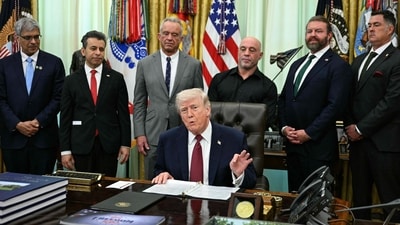
THE CEASEFIRE between America and Iran, as Donald Trump tells it, will usher in a “golden age” for the Center East. But the primary day of that truce was among the many bloodiest days the area has seen because the struggle started on February twenty eighth.US-Iran ceasefire faces pressure as violence surges throughout Lebanon and Gulf, exposing regional vulnerabilities and uncertainty over peace talks.Everybody breathed a sigh of aid on April eighth when the president retreated from his harrowing menace to wipe out Iranian civilisation. Mr Trump had spent the earlier two weeks demanding that Iran reopen the Strait of Hormuz or face assaults on its energy grid. With lower than 90 minutes to go earlier than his deadline, nevertheless, Mr Trump introduced a two-week ceasefire. Negotiators from America and Iran are attributable to meet to debate a everlasting finish to the struggle.
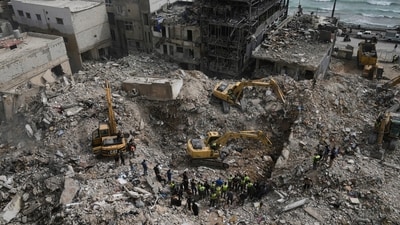
Their first assembly is scheduled for April tenth in Islamabad, the capital of Pakistan, which has performed a central function in passing messages between the fighters.Reduction quickly turned again to dread, although: other than America, nobody instantly ceased hearth. By far the worst violence was in Lebanon, the place Israel has been preventing Hizbullah, an Iranian-backed Shia militia, which joined the struggle on March 2nd by firing a volley of rockets at Israel.Shehbaz Sharif, the Pakistani prime minister, had mentioned that the truce with Iran would additionally embrace Lebanon. His Israeli counterpart insisted it didn't, and Mr Trump supplied no resistance. Hours later Israel launched a co-ordinated wave of greater than 100 air strikes throughout the nation.
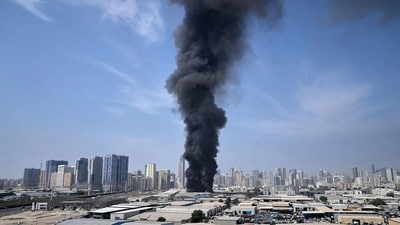
A whole bunch of individuals had been killed and injured; hospitals had been overwhelmed, and ran in need of blood.In the meantime, Iranian missiles and drones continued to rain down throughout the Gulf. In Saudi Arabia they hit an important pipeline that carries 7m barrels per day of oil to the Crimson Sea, permitting a share of the dominion’s oil exports to bypass Hormuz. In Kuwait they focused energy and water-desalination vegetation. The United Arab Emirates (UAE) mentioned it was attacked greater than 50 occasions. This was one of many heaviest days of Iranian assaults because the begin of the struggle.Some analysts noticed it as a response to Israel’s actions in Lebanon. Others puzzled if it was a consequence of the decentralised means Iran has fought this struggle.
With its leaders hidden in bunkers and the mobile-phone community penetrated by Israeli spies, communication is troublesome; the Islamic Revolutionary Guard Corps, the regime’s most elite preventing power, has given commanders within the area latitude to launch assaults on their very own initiative. Some could also be unaware of the ceasefire, and even selecting to disregard it.It's too early to know whether or not the ceasefire will actually take maintain, not to mention whether or not the talks in Pakistan will succeed. Meaning it's untimely to adjudicate whether or not Iran or America gained the struggle (though that has not stopped each from claiming victory).
If the negotiations result in a deal, and Iran agrees to finish its regional aggression in trade for aid from American sanctions, each would arguably win; in the event that they fail and the struggle resumes, each would possibly lose.No secure harbourSimilarly, how the struggle ends will form how different nations within the area see the longer term. If Iran and America stay at daggers drawn, Gulf states must metal themselves for additional battle. However, a deal would possibly imply that, in time, they are going to come to view Iran as a business competitor moderately than a navy menace.What is obvious, although, is that Gulf states have suffered among the heaviest losses. The financial price of the struggle has run into the tens of billions of {dollars}: misplaced oil-and-gas income, injury to important infrastructure, even the invoice for air-defence interceptors.
The reputational injury could also be better nonetheless. The struggle has uncovered two horrifying vulnerabilities—one geographic, the opposite geopolitical—for which Gulf states haven't any simple repair.First is their reliance on the Strait of Hormuz. For many Gulf states, the waterway is both their main sea hyperlink to international markets or their just one: they ship out hydrocarbons and different commodities, and import all the pieces from cereals to automobiles. Iran’s capability to close the strait poses an existential menace; its plan to cost tolls on vessels utilizing the waterway smacks of extortion.To be truthful, it might not have the ability to implement the scheme in peacetime, particularly if Oman, which sits on the south facet of the strait, doesn't associate with it. But officers throughout the Gulf are discussing alternate options to the strait.
One, proposed beneath Joe Biden’s administration, can be a hall of railways and pipelines that stretches to Israel. One other would terminate in Syria—which, remarkably, has been among the many most secure locations within the area over the previous six weeks. They may additionally develop present pipelines which terminate on the Crimson Sea or the Gulf of Oman.But none of those provide a fast or dependable resolution. Pipelines would take years to construct and are simple targets, as the most recent Iranian strike on Saudi Arabia demonstrated. Furthermore, the principle clients for Gulf oil are in Asia, and the most important oil tankers are too heavy to transit the Suez Canal when absolutely laden. Piping crude to the Mediterranean can be a pricey, sluggish workaround.
The identical goes for imports: fleets of lorries are a poor substitute for cargo ships.The opposite vulnerability for Gulf states is their reliance on an more and more unreliable America. For many years, the presence of American troops on the Arabian peninsula was meant to discourage exterior assault. Mr Trump’s struggle has flipped that logic on its head: as a substitute of deterring a battle, America initiated one. In public, most Gulf officers insist the struggle is not going to shake their bond with America. Their non-public views are extra nuanced. A number of specific a form of purchaser’s regret about Mr Trump, a president they labored exhausting to court docket. Lower than a 12 months in the past he stood within the Saudi capital and introduced an finish to “interventionalist” wars within the Center East.
Now he's waging one.But in relation to the broader relationship with America, Gulf states haven't any clear various. Britain and France are serving to to shoot down drones above Qatar and the UAE, however their reluctance to decide to a post-war maritime mission within the Strait of Hormuz has irked some Gulf governments. Europe, of their eyes, is unwilling and unable to embrace a severe hard-power function.They produce other choices, in fact. Qatar will deepen its ties with Turkey, which has deployed troops within the emirate since 2017. Saudi Arabia will agency up the defence pact it inked with Pakistan in September. South Korea rushed an air-defence system to the UAE through the struggle; the 2 nations have grown more and more shut.
If such center powers may also help them diversify their relationships, nevertheless, they can't substitute for a superpower.Nice powers, small comfortThis factors to a different lesson of the struggle. Arab states thought they might keep out of competitors between America and its great-power rivals. When Russia invaded Ukraine, the Center East sought to stay impartial. Vladimir Putin has not returned the favour. Russia has reportedly supplied Iran with satellite tv for pc imagery to assist it strike targets in Arab states. In the meantime, Volodymyr Zelensky rushed to the Gulf to supply assist capturing down drones: the Iranian Shahed fashions which have wreaked havoc throughout the area, in spite of everything, are the identical ones Russia is utilizing in opposition to Ukraine.There's additionally frustration with China. It did assist nudge Iran in direction of accepting Mr Trump’s ceasefire.
However a rustic that imports most of its oil from the Center East joined Russia in vetoing a UN Safety Council decision, sponsored by Bahrain, to authorise a navy mission in Hormuz. On the similar time, Russia and China have been underwhelming allies for Iran as effectively. The previous has supplied focusing on assist however seemingly not far more. The latter is unlikely to supply a lot assist with post-war reconstruction if America doesn't ease sanctions.A number of years in the past everybody within the Center East was eager to speak concerning the area’s new multipolar period. Now America is on the centre of occasions, for higher or worse, and its rivals are on the margins.But one among America’s closest allies is more and more seen with suspicion as effectively. Exterior the UAE, many Arab officers now regard Israel as a destabilising power within the area.
They imagine it dragged Mr Trump into the struggle by deceptive him about how simple it might be to topple the Iranian regime (a cost that wrongly absolves Mr Trump of blame). In addition they suppose its ferocious bombing of Beirut on April eighth appears to be like like an effort to explode the American ceasefire with Iran.All of this leaves the Gulf states in a quandary. Earlier than the struggle the area had loved many years of relative peace. It thought itself an entrepot immune from the Center East’s many conflicts. America would hold it secure, even because it pursued nearer ties with Russia and China; for some, nearer ties with Israel additionally supplied the promise of a staunch ally in opposition to their foe in Tehran. The struggle has upended all of these assumptions directly.